Insights

What’s Involved in Training Employees to Recognize Signs of Human Trafficking
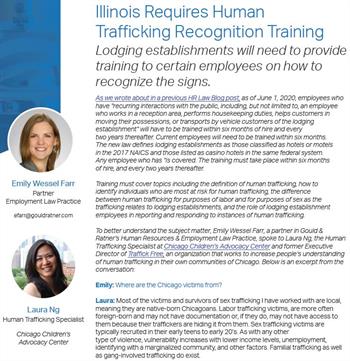
As we wrote about in a previous HR Law Blog post, as of June 1, 2020, employees who have “recurring interactions with the public, including, but not limited to, an employee who works in a reception area, performs housekeeping duties, helps customers in moving their possessions, or transports by vehicle customers of the lodging establishment” will have to be trained within six months of hire and every two years thereafter. Current employees will need to be trained within six months.

U.S. Supreme Court Rules Title VII Protects LGBTQ Employees
Federal civil rights law protects gay and transgender employees from discrimination, the U.S. Supreme Court declared June 15, 2020, in Bostock v. Clayton County, Georgia. In a 6-3 decision, the court resolved the question of whether discrimination based on sexual orientation and/or gender identity is deemed to be discrimination based on sex, and therefore covered by Title VII, the portion of the Civil Rights Act of 1964 that prohibits discrimination in employment on the basis of sex, race, color, religion and national origin.
EEOC Updates Pandemic Workplace Guidance
UPDATE: In its latest update to its pandemic workplace guidance, the EEOC addresses questions employers will face as businesses reopen and employees return to work. In advance of employees’ return, employers are encouraged to provide information to all employees about who to contact in the event they wish to request an accommodation for a disability they may need upon return to the workplace. Such information can also include CDC-listed medical conditions that may place people at higher risk of serious illness if they contract COVID-19. Employers may begin the interactive process when they receive the request, even if no date has been announced for employees’ return. As always, employers should ensure that those who receive requests for accommodation handle such requests consistent with federal employment nondiscrimination laws.
More Flexibility for Updated Paycheck Protection Program Rules
UPDATE: SBA Administrator Jovita Carranza and Treasury Secretary Steven Mnuchin released a joint statement on June 9, 2020, confirming that partial forgiveness is still permissible: “If a borrower uses less than 60 percent of the loan amount for payroll costs during the forgiveness covered period, the borrower will continue to be eligible for partial loan forgiveness, subject to at least 60 percent of the loan forgiveness amount having been used for payroll costs.”
June 4, 2020
How One Small Business Is Staying a Cut Above Upon Reopening
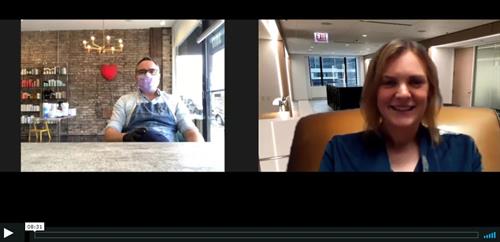
As Illinois businesses start to slowly reopen, employers are faced with a new normal. Emily Wessel Farr spoke with John Flemal, owner of Urban Lift Salon in Chicago, about how his team prepared for a safe and successful reopening. Check out the interview and Urban Lift’s safety video to customers.